Everything Changes. Some Things Don’t.
The Journey from Modern Survey to RADICL and a mission that never wavered.


By Dan Riley and Patrick Riley
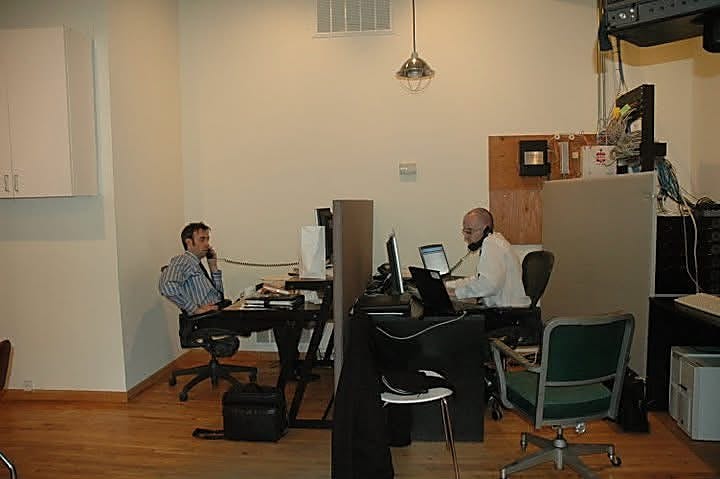
There is a photo of us from the mid-90s. Two guys at desks, head to head, corded phones pressed to our ears. Servers stacked behind us. No cloud. No runway. No playbook.
We were brothers building a SaaS platform before anyone had a name for it. We were solving a problem we believed in and we had the conviction to see it through.
That photo could have been taken yesterday. Years later, we are doing the same thing in an AI world. Different era. Same posture.
Where It Started
In 1999, Patrick and I co-founded Modern Survey with our partner Don MacPherson. We were not following a trend. There was no trend. Employee Engagement as a discipline barely existed. The tools were primitive. Paper and desktop software. The market was skeptical. And we were three people who believed, with everything we had, that organizations could do better by their people if only they could see what was actually happening inside them.
We built Modern Survey from scratch. No cloud infrastructure. No app stores. No LinkedIn to recruit from. Just the work, the belief, and each other.
What we were really building, though we would not have used this language at the time, was visibility. A way for leaders to see their organizations clearly. To understand not just what people were doing, but how they were doing. Whether teams had what they needed. Whether people felt connected to the mission.
We spent 16 years building that. Growing it. Refining it. Serving some of the most demanding enterprise clients in the world.
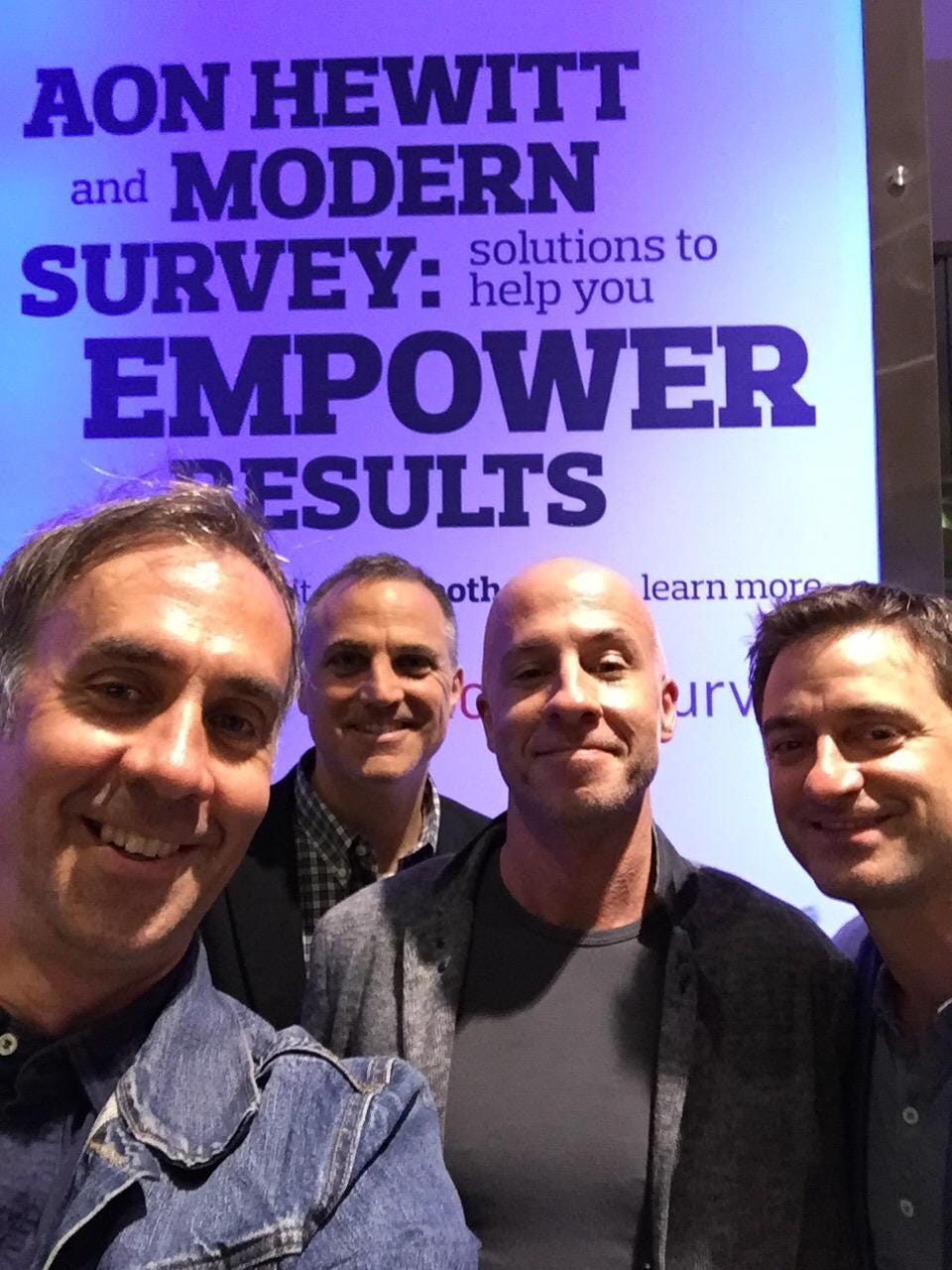
In February 2016, Aon Hewitt acquired Modern Survey. It was a validation of everything we had built and the beginning of the next chapter.
What Happens After You Sell
People ask what it feels like to sell a company you built from nothing. The honest answer is: complicated.
There is pride. There is relief. There is grief you do not expect. And then, after enough time passes, there is a quiet, persistent itch.
Patrick and I went our separate ways for a while. Different roles, different organizations, different continents in some stretches. I went to Aon as a Partner and EMEA Talent Practice Leader, then to Kincentric as Chief Client Officer. Patrick pursued his own path.
But we kept talking. About the work. About what we had seen inside organizations over 20 years. About what had changed and what had not.
The tools had changed. The problems had not.
Leaders were still flying blind. Enterprises were still spending billions on frameworks and consulting engagements and offsite workshops trying to answer one question: how are our teams really doing? And they still could not get a clear, real-time answer.
The recommendations still aged out before the ink dried.
We had spent our careers watching organizations pour resources into understanding their people and still come up short. Not because they did not care. Because they could not see.
That gap stayed with us.
The Music. The Films. The Why Behind the Why.
Here is something most people do not know about us: Patrick and I are musicians. We have played sold-out shows. We opened for the Deftones. We have stood on stages and felt what it means to connect with an audience in real time. To read the room, to adjust, to give people something that actually lands.
We are also film producers. Our film Tuscaloosa won awards. Telling stories is not a hobby for us. It is how we make sense of the world.
Why does this matter? Because it shaped how we think about organizations.
A band that cannot hear itself play cannot make music. A film crew that cannot see the dailies cannot make a movie. A leadership team that cannot see how their people are actually doing cannot lead.
Connection is not strategic. It is biological. Humans are wired for belonging, for trust, for the feeling that the people around them have their back. When that is present, teams perform. When it is absent, no amount of consulting will fix it.
We knew this in our bones long before we had language for it. The stage taught us. The film set taught us. Twenty-five years of building technology for organizations confirmed it.
Why We Built RADICL
In late 2020, Patrick and I started building again.
Not because the market told us to. Not because a VC handed us a thesis. Because we could not stop thinking about the problem.
Organizations do not have a performance problem. They have a visibility problem. And until leaders can see how their teams actually operate, in real time, continuously, grounded in behavioral science, they will keep paying for answers they should already have.
We built RADICL to fix that.
Not with more consulting. Not with another annual engagement survey that takes six months to produce results nobody acts on. With continuous, real-time visibility into how every team in your organization operates across three dimensions we call clarity, capability, and connection.
Clarity: Do people know what they are supposed to do and why it matters? Capability: Do they have what they need to do it? Connection: Do they feel like they belong to something worth belonging to?
When leaders can see these things clearly, not once a year but always, they stop guessing. They start leading.
What We Use to Run RADICL
Here is the part we are most proud of, and the part we talk about least.
We use RADICL to run RADICL, alongside our outstanding team.
Every week, Patrick and I look at how our own team is doing across clarity, capability, and connection. We see where we are strong. We see where we are not. We make decisions based on what we can actually see, not what we assume.
We are not just offering something we believe in. We are running on it.
This is what it means to be builders at heart. You do not ship something and walk away. You live inside it. You let it show you the truth about your own organization, even when the truth is uncomfortable.
Especially then.
The Long Game
Modern Survey was a chapter. A long, meaningful, hard-won chapter. The acquisition was not the finish line. It was proof that the mission had merit and a launching pad for what came next.
RADICL is the next chapter. But the mission is the same as it was in 1999: make work better. Give leaders the visibility they need to actually lead. Help teams feel the clarity, capability, and connection that makes them not just functional but formidable.
We are scaling fast. We are bringing on enterprise teams who are ready to stop flying blind. If you lead HR, operations, or people strategy and you are tired of paying for answers you should already have, now is the time.
We call it an experiment. You might call it a competitive advantage.
A Note on Brothers
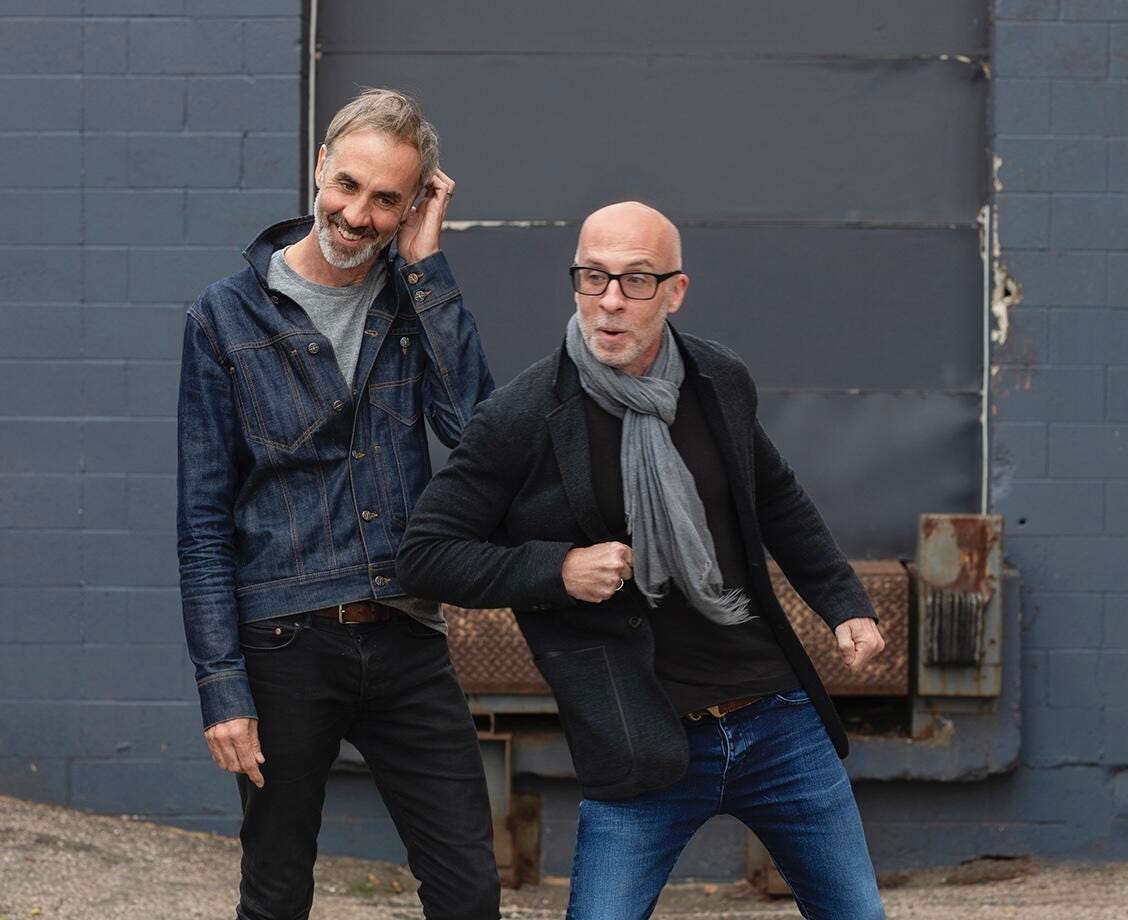
People sometimes ask what it is like to build a company with your brother. The honest answer is: it is the only way we know how to do it.
Patrick and I have been in the trenches together for 30 years (a lifetime, really!). We have celebrated together. We have disagreed, loudly, productively, and with full respect for each other’s conviction. We have sat in rooms where everything felt impossible and found a way through.
Brothers then. Brothers now.
The tools have changed. The posture has not. And the mission, to make work better, to give leaders what they need to actually see their teams, has never wavered.
We showed up in 1999. We showed up in 2020. We are showing up now.
The world of work deserves better. And RADICL is ready to prove it.
Come find out. radiclwork.com
Dan Riley is co-founder/Co-CEO of RADICL Work. Patrick Riley is also co-founder/Co-CEO and his brother. Together they previously co-founded Modern Survey, which was acquired by Aon in 2016. They are based in Minneapolis.
 | A guest post by
|
It most certainly deserves better. Better begins with leadership. Chasing K(no)w!